2026 Presenters
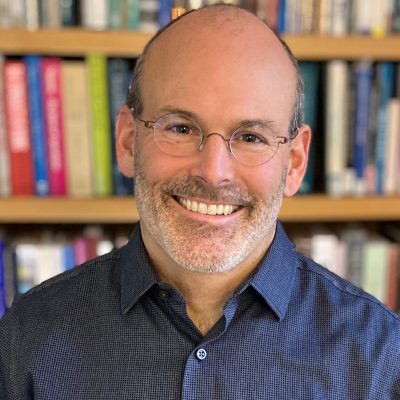
Judson A. Brewer, MD, PhD
Address:
Director of Research and Innovation, Mindfulness Center
Professor, Brown University
Going Beyond Anxiety: Can Insights from the Science of Habit Change Help How we View and Treat Anxiety?
Judson Brewer, MD PhD, is the Director of Research and Innovation at the Mindfulness Center and professor at Brown University. A psychiatrist and internationally known expert in mindfulness training for addictions. Brewer has developed and tested novel mindfulness programs for behavior change, including both in-person and app-based treatments for smoking, emotional eating, and anxiety. He has also studied the underlying neural mechanisms of mindfulness using standard and real-time fMRI, and source-estimated EEG. His TED talk, entitled “A simple way to break a bad habit” has been watched over 20 million times. He is the author of The Craving Mind: from cigarettes to smartphones to love, why we get hooked and how we can bread bad habits (New Haven: Yale University Press, 2017), the New York Times best-seller, Unwinding Anxiety: New Science Shows How to Break the Cycles of Worry and Fear to Heal Your Mind (Avery/Penguin Random House, 2021) and The Hunger Habit: why we eat when we’re not hungry and how to stop (Avery/Penguin Random House, 2024)
Reading List
Brewer J. (2019). Mindfullness training for addictions: has neuroscience revealed a brain hack by which awareness subverts the addictive process?. Current opinion in psychology, 28, 198-203. https://doi.org/10.1016/j.copsyc.2019.01.014
Brewer, J.A., & Roy, A. (2021). Can Approaching Anxiety Like a Habit Lead to Novel Treatments?. American journal of lifestyle medicine, 15(5), 489-494. https://doi.org/10.1177/15598276211008144
Geo, M., Roy, A., Sharkey, K.M., Hoge, E.A., Liu, T., & Brewer, J.A. (2022). Targeting Anxiety to Improve Sleep Disturbance: A Randomized Clinical Trial of App-Based Mindfulness Training. Psychosomatic medicine, 84(5), 632-642. https://doi.org/10.1097/PSY.0000000000001083
Roy, A., Druker, S., Hoge, E.A., & Brewer, J.A. (2020). Physician Anxiety and Burnout: Symptom Correlates and a Prospective Pilot Study of App-Delivered Mindfulness Training. JMIR mHealth and uHealth, 8(4), e15608. https://doi.org/10.2196/15608
Roy, A., Hoge, E.A., Abrante, P., Druker, S., Liu, T., & Brewer, J.A. (2021). Clinical Efficacy and Psychological Mechanisms of an App-Based Digitial Therapeutic for Generalized Anxiety Disorder: Randomized Controlled Trial. Journal of medical Internet research, 23(12), e26987. https://doi.org/10.2196/26987
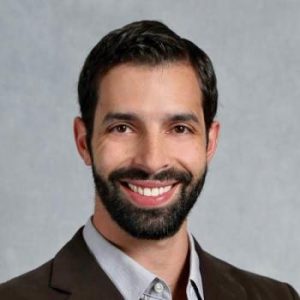
Corey Keller, MD, PhD
Address:
Associate Professor of Psychiatry and Behavioral Sciences
Stanford University
Precision Neurotherapeutics: Biomarker-guided Neuromodulation for Psychiatry
Dr. Keller, MD, PhD, is an Associate Professor of Psychiatry and Behavioral Sciences at Stanford University. He received his MD and PhD in neuroscience from the Medical Scientist Training Program at Albert Einstein College of Medicine and completed psychiatry residency at Stanford focused on interventional psychiatry. The overarching goals of Dr. Keller’s Precision Neurotherapeutics Laboratory (precisionneuro.stanford.edu) is to improve brain stimulation treatment for neurological and psychiatric disorders. His lab focuses on understanding neural mechanisms of how brain stimulation techniques alter brain circuits in an effort to develop novel, personalized, and more effective interventions. His lab combines invasive and noninvasive brain stimulation coupled with electrophysiology techniques to answer these pressing questions.
Reading List
Chen NF, Hassan U, Ross JM, Forman L, Hartford JW, Gogulski J, Parmigiani S, Truong J, Keller CJ, Cline CC. Noninvasive profiling of input-output excitability curves in human prefrontal cortex. bioRxiv [Preprint]. 2025 Dec 4: 2025.09.26.678876. doi: 10.1101/2025.09.26.678876. PMID: 41040393; PMCID: PMC12485743.
Gogulski J, Cline CC, Ross JM, Truong J, Sarkar M, Parmigiani S, Keller CJ. Mapping cortical excitability in the human dorsolateral prefrontal cortex. Clin Neurophysiol. 2024 Aug; 164:138-148. doi: 10.1016/j.clinph.2024.05.008. Epub 2024 May 27. PMID: 38865780; PMCID: PMC11246810.
Keller CJ, Huang Y, Herrero JL, Fini ME, Du V, Lado FA, Honey CJ, Mehta AD. Induction and Quantification of Excitability Changes in Human Cortical Networks. J Neurosci. 2018 Jun 6;38(23):5384-5398. doi: 10.1523/JNEUROSCI.1088-17.2018. Epub 2024 May 21. PMID: 29875229; PMCID: PMC5990984.
Subramanian AK, Talbot A, Kim N, Parmigiani S, Cline CC, Solomon EA, Hartford JW, Huang Y, Mikulan E, Zauli FM, d’Orio P, Cardinale F, Mannini F, Pigorini A, Keller CJ. Scalp EEG predicts intracranial brain activity in humans. bioRxiv [Preprint]. 2025 Apr 7:2025.04.07.647612. doi: 10.1101/2025.04.07.647612. PMID: 40291696; PMCID: PMC12026988.
Wang, J.B., Hassan, U., Bruss, J.E., Oya, H., Uitermarkt, B.D., Trapp, N.T., Gander, P.E., Howard, M.A., Keller, C.J., & Boes, A.D. (2024). Effects of transcranial magnetic stimulation on the human brain recorded with intracranial electrocorticography. Molecular Psychiatry, 29(5), 1228-1240. https://doi.org/10.1038/s41380-024-02405-y

Lisa McTeague, PhD
Address:
Clinical Psychologist and Assistant Professor
Medical University of South Carolina
Lisa M. McTeague, Ph.D., is a clinical psychologist and an assistant professor in the Brain Stimulation Laboratory of the Department of Psychiatry and Behavioral Sciences at the Medical University of South Carolina (MUSC). She earned her bachelor’s degree from Harvard College and her doctoral degree from University of Florida. Prior to joining the MUSC faculty in fall 2014, she was faculty in the UF Department of Clinical & Health Psychology and the Center for the Study of Emotion and Attention as well as the Stanford University Department of Psychiatry and Behavioral Sciences. Funded by a NIMH K23 award she is working to develop neurocircuit-informed treatment adjuncts for cognitive-behavioral approaches for PTSD, targeting deficits demonstrated in experimental affective neuroscience. While her current work is focused on PTSD, the aim is purposefully transdiagnostic – with implications for highly related anxiety and mood disorders and trauma exposure. Specifically, her work utilizes transcranial magnetic stimulation, concurrent with fMRI, as a casual probe of neural network integrity and susceptibility to perturbation in chronic and refractory anxiety and depression. The current focus is to garner pilot data and essential guidance on the feasibility of using TMS to modify neurocircuits. In the service of optimizing and personalizing care, the long-term aim is to “rescue” deficient emotion reactivity and regulation by exogenously targeting these circuits as a preamble to cognitive-behavioral treatment.
Reading List
Caulfield KA, Fleischmann HH, George MS, McTeague LM. A transdiagnostic review of safety, efficacy, and parameter space in accelerated transcranial magnetic stimulation. J Psychiatr Res. 2022 Aug;152:384-396. doi: 10.1016/j.jpsychires.2022.06.038. Epub 2022 Jun 28. PMID: 35816982; PMCID: PMC10029148.
George MS, Huffman S, Doose J, Sun X, Dancy M, Faller J, Li X, Yuan H, Goldman RI, Sajda P, Brown TR. EEG synchronized left prefrontal transcranial magnetic stimulation (TMS) for treatment resistant depression is feasible and produces an entrainment dependent clinical response: A randomized controlled double blind clinical trial. Brain Stimul. 2023 Nov-Dec;16(6):1753-1763. doi: 10.1016/j.brs.2023.11.010. Epub 2023 Dec 2. PMID: 38043646; PMCID: PMC10872322.
He H, Sun X, Doose J, Faller J, McIntosh JR, Saber GT, Huffman S, Hong L, Pantazatos SP, Yuan H, McTeague LM, Goldman RI, Brown TR, George MS, Sajda P. TMS-induced modulation of brain networks and its associations to rTMS treatment for depression: a current fMRI-EEG-TMS study. Brain Stimul. 2025 Nov-Dec;18(6):1955-1965. doi: 10.1016/j.brs.2025.10.013. Epub 2025 Oct 16. PMID: 41109521; PMCID: PMC12716231.
McTeague LM, Huemer J, Carreon DM, Jiang Y, Eickhoff SB, Etkin A. Identification of Common Neural Circuit Disruptions in Cognitive Control Across Psychiatric Disorders. Am J Psychiatry. 2017 Jul 1;174(7):676-685. doi: 10.1176/appi.ajp.2017.16040400. Epub 2017 Mar 21. PMID: 28320224; PMCID: PMC5543416.
McTeague LM, Rosenberg BM, Lopez JW, Carreon DM, Huemer J, Jiang Y, Chick CF, Eickhoff SB, Etkin A. Identification of Common Neural Circuit Disruptions in Emotional Processing Across Psychiatric Disorders. Am J Psychiatry. 2020 May 1;177(5):411-421. doi: 10.1176/appi.ajp.2019.18111271. Epub 2020 Jan 22. PMID: 31964160; PMCID: PMC7280468.
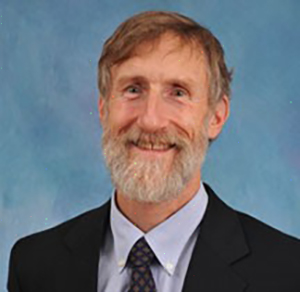
David R. Rubinow, MD
Address:
Professor and Chair Emeritus
Department of Psychiatry
University of North Carolina at Chapel Hill
Depression and Reproduction: An Evolving State of Mind
Dr. Rubinow, MD, is Professor and Chair Emeritus, Department of Psychiatry, University of North Carolina at Chapel Hill, where he also founded UNC Women’s Mood Disorders Center. Prior to assuming these positions, he was the Clinical Director of the National Institute of Mental Health from 1987-2006 and the Chief of the Behavioral Endocrinology Branch, NIMH from 1996-2006. His research has focused largely on the mechanisms underlying reproductive endocrine-related mood disorders and the neurobehavioral effects of gonadal steroids. He is the past President of the Society of Biological Psychiatry and the American College of Neuropharmacology. His many awards include the William C. Menninger Memorial Award from the American College of Physicians, the Mood Disorders Research Award from the American College of Psychiatrists, and the Gold Medal Award for Research from the Society of Biological Psychiatry. He is a member of National Academy of Medicine.
Reading List
McHenry, J.A., Otis, J.M., Rossi, M.A., Robinson, J.E., Kosyk, O., Miller, N.W., McElligott, Z.A., Budygin, E.A., Rubinow, D.R., & Stuber, G.D. (2017). Corrigendum: Hormonal gain control of a medial preoptic area social reward circuit. Nature neuroscience, 20(10), 1427-1430. https://doi.org/10.1038/nn1017-1427c
Rubinow, D.R., & Schmidt, P.J. (2019). Sex differences and the neurobiology of affective disorders. Neuropsychopharmacology: official publication of the American College of Neuropsychopharmacology, 44(1), 111-128. https://doi.org/10.1038/s41386-018-0148-x
Rudzinskas, S., Hoffman, J.F., Martinez, P., Rubinow, D.R., Schmidt, P.J., & Goldman, D. (2021). In vitro model of perimenopausal depression implicates steroid metabolic and proinflammatory genes. Molecular psychiatry, 26(7), 3266-3276. https://doi.org/10.1038/s41380-020-00860-x
Wei, S.M., Wakim, P., Martinez, P.E., Nieman, L.K., Rubinow, D.R., & Schmidt, P.J. (2025). Differential Effects of Ovarian Steroids in Women With and Without Premenstrual Dysphoric Disorder: A Replication and Extension of Findings. The American journal of psychiatry, 182(10), 922-934. https://doi.org/10.1176/appi.ajp.20240596
Wei, S.M., Baller, E.B., Martinez, P.E., Goff, A.C., Li, H., Kohn, P.D., Kippenhan, J.S., Soldin, S.J., Rubinow, D.R., Goldman, D., Schmidt, P.J., & Berman, K.F. (2021). Subgenual cingulate resting regional cerebral blood flow in premenstrual dysphoric disorder: differential regulation by ovarian steroids and preliminary evidence for an association with expression of ESC/E(Z) complex genes. Translational psychiatry, 11(1), 206. https://doi.org/10.1038/s41398-021-01328-4
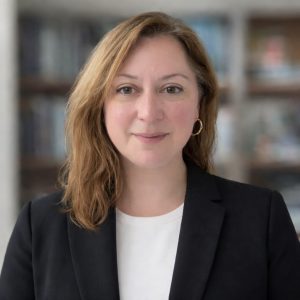
Leah H. Somerville, PhD
Address:
Grafstein Family Professor of Psychology
Center for Brain Science
Harvard University
Building Complex Emotions and Tuning Emotion-Guided Behavior through Adolescence
Leah Somerville, PhD, is the Grafstein Family Professor of Psychology and core faculty in the Center for Brain Science at Harvard University. She is a northern Wisconsin native who got her start conducting emotion research at the University of Wisconsin, where she completed her undergraduate studies in Psychology and received her Bachelors degree. Now Leah directs the Affective Neuroscience and Development Lab (https://andl.wjh.harvard.edu), which focuses on characterizing adolescent brain development, and the consequences of brain development on psychological functioning and well being. The lab’s work integrates behavioral, computational, and neuroimaging approaches, and has played leading roles in large-scale, national research projects such as the Human Connectome Project in Development. Leah has received several honors recognizing her work including the Troland Award from the National Academy of Sciences, a Harvard College Professorship, early career awards from the Flux Society, Cognitive Neuroscience Society, the Association for Psychological Science, and the Social and Affective Neuroscience Society, and the Everett J. Mendelsohn Excellence in Mentoring Award.
Reading List
Davidow, J.Y.*, Insel, C*, & Somerville, L.H. (2018). Adolescent development of value guided goal pursuit. Trends in Cognitive Sciences, 22(8), 725-736. *Equal contribution
Grisanzio, K.A., Flournoy, J.C., Mair, P., & Somerville, L.H. (2023). Shifting qualities of negative affective experience through adolescence: Age-related change and associations with functional outcomes. Emotion, 23(1), 278-288.
Insel, C., Kastman, E.K., Glenn, C.R., & Somerville, L.H. (2017). Development of corticostriatal connectivity constrains goal directed behavior through adolescence. Nature Communications, 8(1), 1605.
Nook, E.C., Sasse, S.F., Lambert, H.K., McLaughlin, K.M., & Somerville, L.H. (2018). The nonlinear development of emotion differentiation: Granular emotional experience is low in adolescence. Psychological Science, 29(8), 1346-1357. Supplement Data & Materials
Rodman, A.M., Powers, K.E., Kastman, E.K., Kabotyanski, K.E., Stark, A.M., Mair, P., & Somerville, L.H. (2023). Physical effort exertion for peer feedback reveals evolving social motivations from adolescence to young adulthood. Psychological Science, 34(1), 60-74.
Symposium Hosts

Richard J. Davidson, PhD
Address:
Vilas Professor of Psychology and Psychiatry
Director, Center for Healthy Minds
University of Wisconsin - Madison
Richard J. Davidson received his Ph.D. from Harvard University in Psychology and has been at Wisconsin since 1984. He has published more than 400 articles, numerous chapters and reviews and edited 14 books. He is the author (with Sharon Begley) of “The Emotional Life of Your Brain” published by Penguin in 2012. He is co-author with Daniel Goleman of “Altered Traits: Science Reveals How Meditation Changes Your Mind, Brain, and Body”, published by Penguin Books in 2017.
He is the recipient of numerous awards for his research including a National Institute of Mental Health Research Scientist Award, a MERIT Award from NIMH, an Established Investigator Award from the National Alliance for Research in Schizophrenia and Affective Disorders (NARSAD), a Distinguished Investigator Award from NARSAD, the William James Fellow Award from the American Psychological Society, and the Hilldale Award from the University of Wisconsin-Madison. He was the year 2000 recipient of the most distinguished award for science given by the American Psychological Association –the Distinguished Scientific Contribution Award. He was the Founding Co-Editor of the new American Psychological Association journal EMOTION and is Past-President of the Society for Research in Psychopathology and of the Society for Psychophysiological Research.
In 2003 he was elected to the American Academy of Arts and Sciences and in 2004 elected to the Wisconsin Academy of Sciences, Arts and Letters. Named one of the 100 most influential people in the world by Time Magazine in 2006. In 2006 awarded the first Mani Bhaumik Award by UCLA for advancing the understanding of the brain and conscious mind in healing. Madison Magazine named him Person of the Year in 2007. In 2008, he founded the Center for Healthy Minds, a research center dedicated to the study of positive qualities, such as kindness and compassion. In 2011 given the Paul D. MacLean Award for Outstanding Neuroscience Research in Psychosomatic Medicine. Serves on the Scientific Advisory Board at the Max Planck Institute for Human Cognitive and Brain Sciences in Leipzig from 2011-2020 and was Chair of the Psychology section of the American Association for the Advancement of Science from 2011-2013. In 2013 received the NYU College of Arts and Science Alumni Achievement Award. He is a current member of the World Economic Forum’s Global Agenda Council on Mental Health. From 1992-2017, he was a member of the Mind and Life Institute’s Board of Directors. In 2017 elected to the National Academy of Medicine, the premier authority dedicated to the health and medical sciences. In 2018, appointed to the Governing Board of UNESCO’s Mahatma Gandhi Institute of Education for Peace and Sustainable Development (MGIEP).
His research is broadly focused on the neural bases of emotion and emotional style and methods to promote human flourishing including meditation and related contemplative practices. His studies have included persons of all ages from birth though old age and have also included individuals with disorders of emotion such as mood and anxiety disorders and autism, as well as expert meditation practitioners with tens of thousands of hours of experience. His research uses a wide range of methods including different varieties of MRI, positron emission tomography, electroencephalography and modern genetic and epigenetic methods.

Ned H. Kalin, MD
Address:
Hedberg Professor and Chair
Department of Psychiatry
Director, HealthEmotions Research Institute
University of Wisconsin - Madison
Ned H. Kalin, MD, is Hedberg Professor and Chairman of the Department of Psychiatry at the University of Wisconsin School of Medicine and Public Health. He is the Editor in Chief of the American Journal of Psychiatry, the premier scientific journal of the American Psychiatric Association. Dr. Kalin is the Director of the HealthEmotions Research Institute and the Lane Neuroimaging Laboratory, a Professor in the Department of Psychology at the University of Wisconsin, and an affiliate scientist at the Wisconsin Regional Primate Center and the Harlow Primate Laboratory. He serves as the principal investigator for several ongoing NIH funded research projects and has published over 200 peer-reviewed journal articles related to the adaptive and maladaptive expression of emotion and anxiety. His research focuses on uncovering basic mechanisms that relate stress to the development of psychopathology and to understanding the mechanisms that cause some children to be vulnerable for the development of anxiety and depression. In addition to his research activities, he treats patients who suffer from anxiety and depression who are refractory to standard treatment.
Dr. Kalin earned his medical degree from Jefferson Medical School in Philadelphia, Pennsylvania, did his residency in the Department of Psychiatry at the University of Wisconsin, and a fellowship in Neuropsychopharmacology at the National Institute of Mental Health. Dr. Kalin is board certified by the American Board of Psychiatry and Neurology. He is a Fellow Emeritus of the American College of Neuropsychopharmacology and a Fellow of the American College of Psychiatry. He has been recognized for numerous awards including the 1985 A.E. Bennett Award for basic science research in biological psychiatry, 2005 Edward A. Strecker Award, 2007 American College of Psychiatrists Award for research in mood disorders, 2007 Gerald Klerman Senior Investigator Award, 2015 Anna-Monika Prize of the European College of Neuropsychopharmacology, Institute of Living/Hartford Hospital 2020 C. Charles Burlingame Award for compelling contributions to the field of psychiatry throughout his career , and most recently the International Society of Psychoneuroendocrinology Bruce McEwen Lifetime Achievement Award.. In 2013 he was inducted as a Fellow in the American Association for the Advancement of Science, and in 2015 he was elected as a member of the National Academy of Medicine. In 2017, Dr. Kalin was inducted as a Distinguished Life Fellow of the American Psychiatric Association. He has served as President of the International Society of Psychoneuroendocrinology and President of the Society of Biological Psychiatry, as a member of the National Advisory Mental Health Council and as Co-Editor for the international journal, Psychoneuroendocrinology. In 2019, Dr. Kalin was appointed as the Editor-in-Chief of the American Journal of Psychiatry and continues to serve as the editor today.